































Beyond the skin: why the future of skincare starts in its ecosystem
For a long time, caring for the skin was, in essence, about responding to what we see. A dark spot, an imperfection, a loss of radiance. The reaction was almost automatic: identify the problem and look for an active ingredient to correct it.
But skin does not work like that. Or at least, not only like that.
In recent years, the way we understand skincare has changed. It has become more complex, but also more interesting. We no longer talk only about layers or textures, but about balance. About how the skin behaves, how it responds and, above all, what it needs to stay stable.
In this new way of looking at skin, the concept of the microbiome has taken a central role. And with it, one word that appears more and more in formulations: postbiotics.
What are postbiotics and why are they everywhere?
If probiotics are live microorganisms, postbiotics are what remains after them: the compounds they produce during the fermentation process.
It may sound technical, but the idea is quite simple. Instead of working with live bacteria — something complex in cosmetics — formulators use their metabolites, which are stable, safe and easy to integrate into a formula.
That is where their value lies.
Because they allow brands to use the benefits associated with the microbiome without making formulation more difficult or compromising product stability. And in dermocosmetics, that is key.
Beyond the definition, what is really interesting is how they work on the skin. Postbiotics help reinforce the skin barrier function, improve skin tolerance and maintain balance against external factors that are part of daily life: pollution, stress, temperature changes or even lifestyle itself.
They are not an ingredient with an immediate impact. Their effect is quieter, but also more in line with the skin’s physiology.

Balanced skin: the new standard (and why it matters)
For years, perfect skin was understood as skin without imperfections. Smooth, even, without shine, without texture. A very demanding idea and, in many cases, not very realistic.
Today, the standard is different.
People now talk more about balance than perfection. About skin that works well, responds better and does not become altered easily. Skin that does not need constant correction.
And this is where postbiotics make sense.
They do not aim to change the skin in a radical way, but to support it so it can keep its stability. And even if that is less visible in the short term, it leads to more consistent results over time.
Less reactivity, more comfort.
Less intervention, more control.
How postbiotics fit into a real routine
One of the advantages of this technology is that it does not respond to only one need. It adapts.
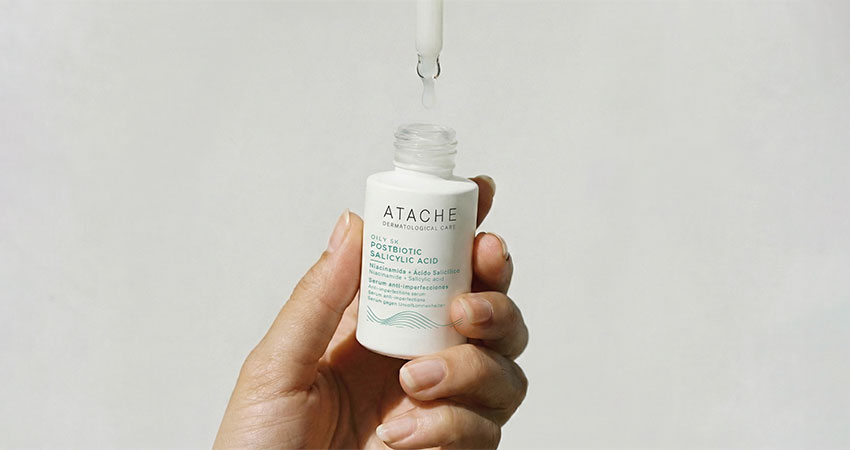
For skin with a tendency to imperfections, for example, combining postbiotics with salicylic acid helps work on pores and uneven texture without unbalancing the skin. It is about cleansing and refining, yes, but without creating that feeling of dryness or tightness that often comes with this type of ingredient.
In a more daily approach, combining them with antioxidants such as green tea adds a layer of protection against the environment. It is not only about hydration, but also about helping the skin stay stable under continuous exposure to external factors.
And when the goal is radiance, adding vitamin C — especially in more stable formats such as liposomal vitamin C — helps improve skin tone without compromising tolerance. The skin looks more even, but also more balanced.
In all cases, the role of the postbiotic is the same: to act as support.
A technology that does not seek attention
There are ingredients designed to be noticed. They create an immediate, visible, even sensory effect.
Postbiotics do not work like that.
They do not stand out on their own, and maybe that is exactly why they are especially interesting. Because they do not seek attention, but coherence. They fit well into the formula, help stabilise it and make it more compatible with the skin.
In a way, they represent a different way of formulating. Less focused on immediate impact and more focused on medium- and long-term performance.
And in a context where the skin is exposed to constant stimuli, that makes a lot of sense.
The real change: caring without altering
If there is one thing that defines this new stage of skincare, it is the intention to act without altering.
To work with the skin, not against it.
Postbiotics fit perfectly into this logic. They do not overload, they do not force and they do not unbalance. They simply help the skin do better what it already knows how to do.
They may not be the most striking ingredient, but they are one of the most coherent with where dermocosmetics are moving.
And maybe that is the key.
Because in the end, the goal is not to transform the skin into something different. It is to keep it in its best possible condition for longer.