
























Understanding renewal changes how you care for your skin
Cell renewal is one of those concepts that almost everyone has heard about, but it is rarely explained clearly. It is often linked to exfoliation, to “activating” the skin, or to adding certain products into the routine. However, it has more to do with how the skin works as a whole than with one specific action.
The skin renews itself continuously. It is a natural process in which cells are created in deeper layers and, over time, move up to the surface. This is always happening. The difference is not whether the skin renews itself or not, but how it does it.
When this process is well organized, the skin stays more even, more stable, and responds better. When it loses that balance, changes begin to appear that are often not directly linked to renewal, even though they depend on it.
When renewal becomes less efficient, the skin shows it
There is no exact moment when cell renewal stops working well. It is a gradual process. That is why it often goes unnoticed at first.
The skin starts to change in subtle ways. The texture becomes less even, the tone looks less uniform, and pores may appear more visible. Sometimes it even feels like products no longer work in the same way.
It is not a specific problem or something that can be solved with just one step. It is the result of a process that has lost rhythm or precision. And this affects not only how the skin looks, but also how it behaves.
The most common mistake: reducing renewal to exfoliation
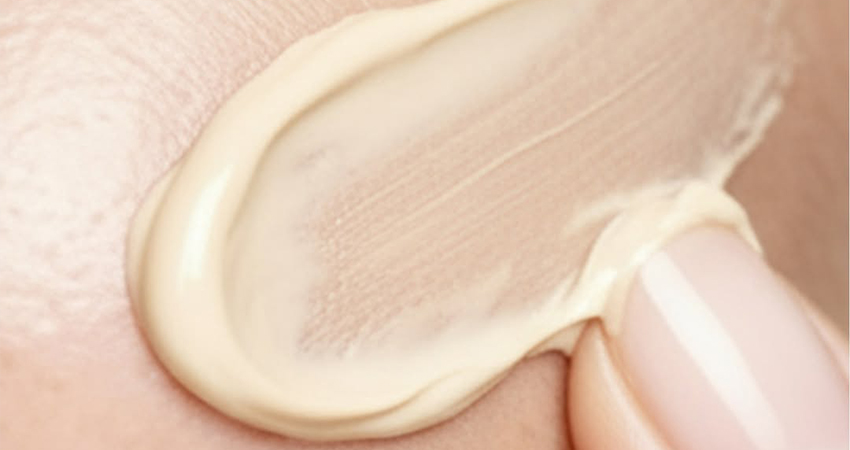
For a long time, cell renewal has been understood as something that can be accelerated by removing layers of skin. That is why exfoliation has had a central place in many routines.
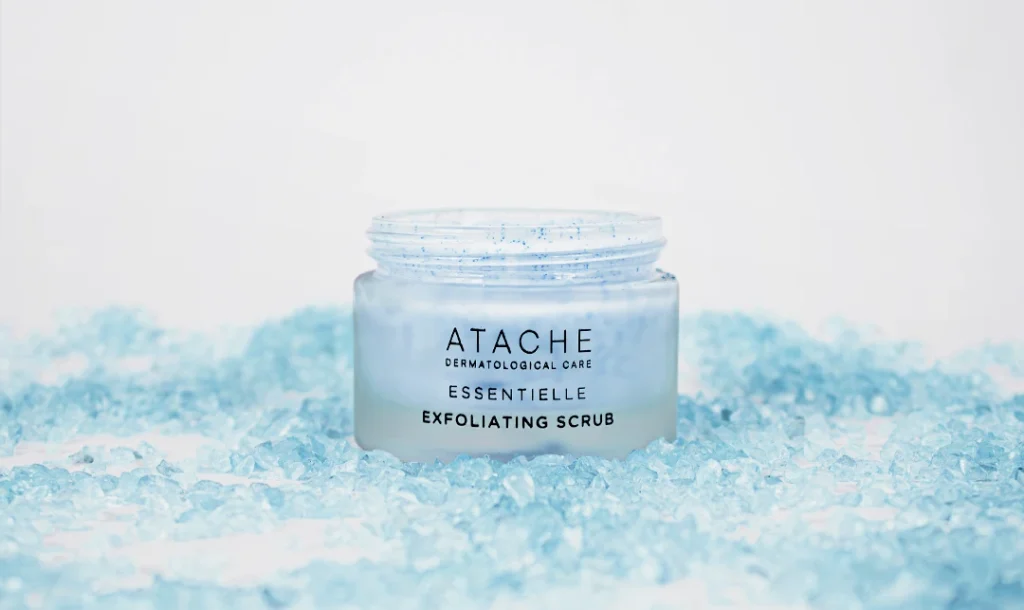
Exfoliation can improve surface texture and it has its role. It can also support skin renewal, but on its own it is not always enough to optimize how the skin creates, organizes, and brings that process to the surface.
This is where confusion usually appears. Cell renewal does not start at the surface. It starts earlier. And if that process is not balanced, removing more does not necessarily lead to a better result.
What really makes a difference in cell renewal
Improving cell renewal does not mean adding more steps or making the routine stronger without a clear reason. The key is to create the right conditions so the skin can keep a more organized and efficient process.
This is where active ingredients play a real role. Not because they simply make the skin work faster, but because they influence how this process is organized.
Some ingredients help stimulate and regulate skin renewal, such as retinoids, which with continued use help the skin look smoother, more even, and more refined. Others, such as exfoliating acids, help remove the cells that build up on the surface and visibly improve texture. Even though they work in different ways, both can be part of a routine designed to support skin renewal.
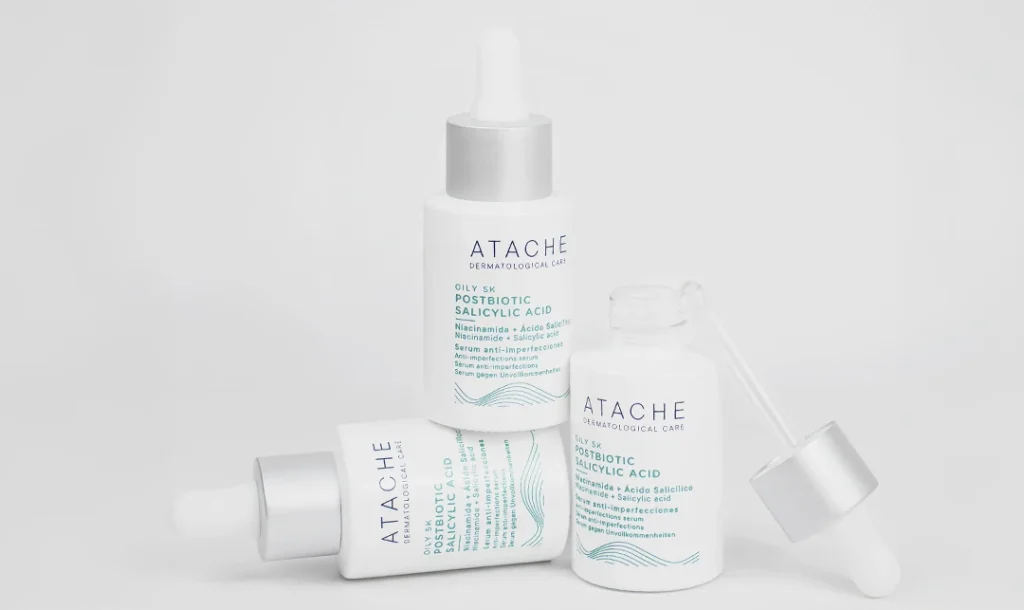
There are also ingredients that do not work by removing or directly stimulating, but still improve the environment where renewal takes place. This is the case with niacinamide or peptides, which help strengthen the skin barrier and keep the skin in a more stable condition.
So the difference is not in one single ingredient or one specific action. It is in how they are combined in the routine to help the skin function better.
Renewing the skin is not about speeding it up, but about improving how it works
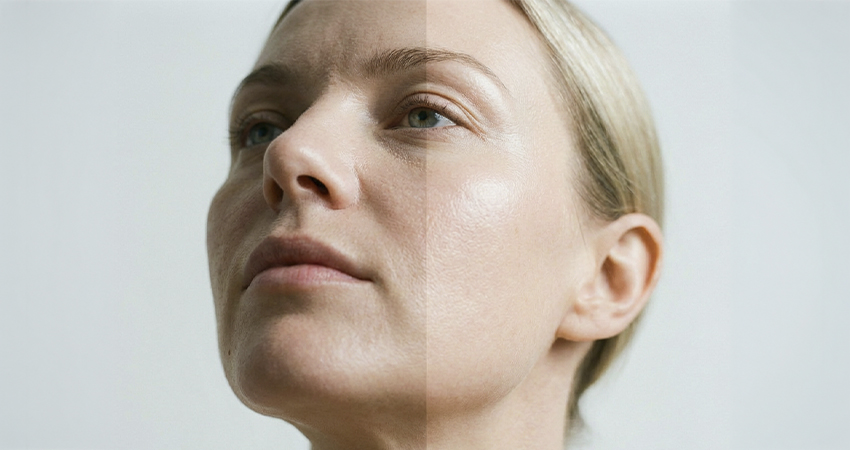
For years, people have tried to “activate” the skin as if the goal was to make it work faster. But the skin does not need speed. It needs consistency.
When cell renewal is stable, the skin becomes more predictable in the way it responds. It keeps its texture better, responds better to products, and adapts more easily to change.
That is why caring for cell renewal is not about doing more, but about doing it with better judgment. Understanding the process helps adjust the routine and avoid actions that, in the long term, may disrupt it.
In the end, cell renewal is a matter of balance
Cell renewal is not a process that needs to be constantly forced. It is something the skin already knows how to do.
The role of skincare is not to replace this process, but to support it. To maintain the right conditions so it can happen in an organized and efficient way.
Because when the skin works well, everything else becomes easier. And that is where the real difference can be seen.